Tuesday, 5 January 2016

Week 6 [4.01-10.01.16]: Living in an Amish Paradise

Living in an Amish Paradise

"Weird" Al’s Yankovic song called “Amish Paradise” gave me an idea for this article’s title - LINK. The song itself is a bit goofy, but in many ways it represents the truth about the Amish community.

This is my last article and I think I left the best topic for now. During the last three terms I wrote about different religions (Buddhism, Mormons and Scientology), but this time I want to write about a very special – in my opinion - group of people. Let me present to you the world of the Amish community!

http://www.enkivillage.com/s/upload/images/2014/12/7cf607a8cf7cc084f20b2a8557786009.jpg

Where can they be found?
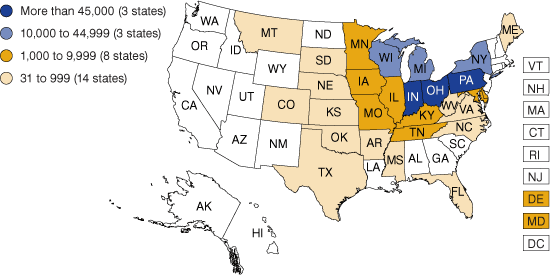
They first settled in Pennsylvania in 1693 and were founded by Jacob Amman – one of religious immigrants from Europe. With years, many new different nodes of this religion were developed - New Order Amish, Andy Weaver Amish, Beachy Amish, Swartzentruber Amish, but the original, the biggest and best known are Old Order Amish. Nowadays the biggest societies can be found in Pennsylvania, Ohio and Indiana, but smaller ones are all over America (some in Canada and Mexico as well). A cult, religion, society, community, family are those words that describe the Amish and all suit them well. They do not have their own sacred book, prophets etc. – they’re Anabaptizes who try to live according to teachings of Jesus Christ in groups/circles of 25-35 families. When one grows larger, around sixty – they split. Each circle has its own bishop, two or three clerics and deacons. Bishops (only men) are chosen by nomination, then lottery and officiate this function till death. But what makes the Amish so original and special?
http://www.incontext.indiana.edu/2012/nov-dec/images/Fig1_amish.gif

People frozen in time
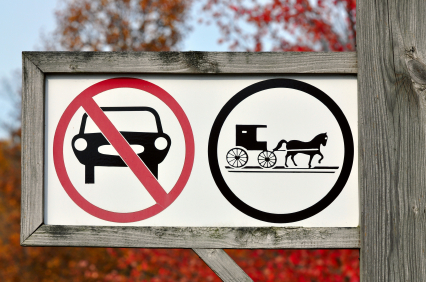
The Amish are well known for their attitude towards technology and the modern world. Before learning more about them, I thought it’s technophobia - that in their opinion electricity and machines are the creation of Satan (I still remember this episode of Dexter’s Laboratory from my childhood called “Ol' McDexter”: LINK or Family’s Guy “Amish Guy”: LINK). And to be honest…? I couldn’t be more wrong. The Amish aren’t scared of technology – they are ‘scared’ of what technology can do and how it spoils modern societies. To clarify now: the Amish are allowed to use modern inventions or even own them in some cases. It all depends on a bishop and a local law – Ordnung; some societies are more restrict than other. For example, they shouldn’t have a car because it’s a luxury, but they can borrow one to visit a family, hitch-hike to travel to a city or when it’s necessary for their job, they’re allowed to have one. The same goes with electric energy, tools, phone lines etc. Why do they choose not to have modern technology in their homes? Because for the Amish, family and work are the most important values in the world (beside God of course). They want to lead simple life and technology could destroy their peace and quiet. To explain it better, they can have an electric line in their house, but the plug could tempt them to have a radio or TV, which later could make them waste time in front of it, lose strong family bonds etc. They do not have modern devices, because they choose not to, not because they’re afraid of them. Most of the time there is a phone, car or other stuff in case of emergency.

A fantastic BBC documentary about the Amish - LINK
http://www.amishreader.com/plaingoodstuffsimplethat/wp-content/uploads/2010/09/NoCars_Yes-Buggy.jpg


No Ordnung? Then Maidung!

As I wrote earlier – the Amish live in small groups and each has its own set of rules called Ordnung. Twice a year they attend council meetings, where public matters are discussed and only then Ordnung can be changed. This unwritten law describes many parts of Amish’s life – the dress code, amount and kind of technology which can be used, proper behavior etc. If some Amish do not follow those rules – then Maidung happens! Maidung can be described as a warning and temporary exclusion from the Amish social life – suppers, weddings, council meetings, financial support or even trade! After many warnings a bishop can excise one, which is called “Bann”, but if an offender asks for forgiveness and realizes his/her mistakes – he is a full member of the society again.

Another BBC Two documentary (“Leaving Amish Paradise”) about leaving the Amish society: LINK


https://kristinaludwig.files.wordpress.com/2015/03/13413625723_a28f6e4b93_z.jpg

What is it like to be the Amish?
For the Amish, the biggest values are family and work, so no wonder that they have a lot of children – six or seven is the average. Another important issue is that the Amish can marry only inside their community, so there are very close connections between families – one can have 30 or 40 cousins. On the other hand, the Amish face many genetic problems due to offspring with close family members. The father is the head and provider of the family, the mother is responsible for cooking, cleaning and child birth, but don’t get it wrong – in Amish communities men and women are equal. A woman can vote during council meetings, husbands respects their opinions, the only thing they’re not allowed is to become bishops. Children, on the other hand, don’t have any rights and nobody asks them about their opinion. They do not get any toys to play with – boys use carpenter’s tools, girls rags and kitchen equipment. It’s also common that they get an animal to rise – it’s believed that it helps them develop, become more independent when they take care of another living being, watch the wonder of birth, grow and sometimes death. Proper raising is very important for the Amish, so their children go to school at the age of six and attend it for 8 years. They learn English, math, writing and reading and basics of geography and history. The Amish do not dance, nor play music, so they’re not taught any form of art in their schools at all. Then, at the age of 14, children can start to work and earn money (but all their wages are held by their parents and given to them, when they’re mature enough), so most of the time they’re taught by their families practical knowledge such as carpentry, agriculture, sawing, how to run business etc. Then another part in the Amish life comes as well – Rumspringa (usually it starts, when youngsters are 16). Rumspringa (“Running around”) is a period, when youngsters are allowed to do what they want, without paying attention to parent’s believes. They usually party a lot, wear different clothes, listen to music, use modern, electrical devices, drive cars, go sightseeing, have premarital sex and sometime do drugs. Usually, around the age of 18, they decide whether they want to stick to Amish beliefs, or they don’t want to belong to this community. This is the only moment when one leaves the society, family still having contact with this relatives (after baptizing, when one leave church – families and friends won’t keep in touch with him/her – it’s called “shunning”). If one decides that he or she still wants to be a part of the church, he or she will get baptized and be treated as a full member of society. Sometimes youngsters get married at this point, but they both need to be part of the Amish society. Rumspringa is believed to be one of the most important part of life, because parents don’t want to push anything on their children and they give them free choice. Maybe that’s why most children decide to be the Amish for the rest of their lives.
Great National Geography's documentary “Amish on Break” about Rumspringa (LINK)

http://4-to-6.com/scoop/wp-content/uploads/2015/10/Amish_1.jpg

Amish’s place in the world

As I wrote before, this society does not approve marriage between Amish and non-Amish and we can find similar sense of independency in other parts of life. The Amish do not pay taxes, don’t have social security and don’t picture themselves as members of America. As pacifists, they refuse to join the army and they put Ordnung above the state law. How do they manage to live without the outside law? When sick, they visit a local herbalist, when homeless or old – someone takes care of them, when in a financial trouble – everyone will chip in. Amish can live without outside world, but they’re kind and gentle and they invite anyone to visit/watch their lives. Nowadays more and more people want to learn about their religion and the Amish come across those needs and create hostels where you can stay and live like they do. Some Americans threat that as a holiday or camp, but the Amish religion is growing. Not only because they live in very big families, but that kind of live fascinates “outside” people, tired of rush and work from nine to five. It’s common that after 2-3 years new members of the Amish church realize that they cannot live like that anymore, but locals are aware of that. They have a saying, that you need to be born Amish, because it will be hard for one to get used to it.

http://2jaug735w09q3iqc322yl87sli.wpengine.netdna-cdn.com/wp-content/uploads/2015/03/barnraising.jpg

The less, the better?

When I heard about the Amish religion I thought that those are closed-minded people, scared of new things, who think that technology and development is wrong. For many years I was so ignorant to stay in this impression, I was a prisoner of my first judgment. After seeing Family Guy’s episode about the Amish, which I gave you a link to, I caught myself wanting to know more about it (especially I wanted to find out if there is such a thing as “corn hole” – no, there isn’t!). And to be honest, I was fascinated by those people – if needed they will use modern technology, but most of the time they don’t want to. They stay against ruining their humble, modest life, which values the most family, community, strong bonds between humans and true, honest labor. And if you need a proof of that - in 2006, in Lancaster, a man got into the Amish school and killed 5 girls and then committed a suicide. Parents of those kids publicly forgave the assassin, prayed for him and offered his family financial and moral support. There are so many things about the Amish religion that are worth knowing – their language, their customs, daily routines, so if you want to, I highly encourage you to learn more. And finally I would like to ask you a question: How long would you last without modern technology? Leave your car, phone, turn off your radio and TV and work hard every day, get in touch with nature, family and a neighbor. Are you strong enough for that? Six British teens took part in a TV show called “Living with the Amish” (LINK) and I'm sure that this experience changed their lives. Could you do the same?

Sources:

Monday, 21 December 2015

Week 6 [21.12-27.12.2015]: A trip to Japan on a shoestring budget


A couple of  weeks ago I returned from Japan. It was a great November  trip. You can’t even imagine how much you can see  without spending too much money. We started our trip in Rome and we had 10 flights during our journey. Quite a lot, right? We chose this way of traveling because it’s faster and cheaper than train and renting cars. From Rome we went to Moscow, but we didn’t see lot there, only the airport :P It was just a stopover., for refueling the plane. After next ten hours we got to the Tokyo’s  airport- Tokyo Narita, but it wasn’t our last stop. We wanted to get to the tropical Island- Tokashiki. We had to catch a plane there. We used a budget airline - Jetstar. The flight cost only a few dollars. It was a really good decision. You can see Tokashiki Island in the  pictures below.


https://www.google.pl/imgres?imgurl=https://upload.wikimedia.org/wikipedia/commons/3/3b/Aharen_Beach_On_Tokashiki_Island_2009_%287373%29.JPG&imgrefurl=https://en.wikipedia.org/wiki/Tokashiki_Island&h=3000&w=4000&tbnid=L5EhmZFxFOOKmM:&docid=CYFpdFeJxebzmM&ei=sXNwVuX4DIO5PY-XhugD&tbm=isch&ved=0ahUKEwillcuK1t7JAhWDXA8KHY-LAT0QMwgfKAAwAA


https://www.google.pl/imgres?imgurl=http://www.aharen.com/files/uploads/mujintou5__large.jpg&imgrefurl=http://www.aharen.com/english/english_marinesports&h=509&w=678&tbnid=n4Itfix9q3w0_M:&docid=GNmU7VOxgCFepM&ei=sXNwVuX4DIO5PY-XhugD&tbm=isch&ved=0ahUKEwillcuK1t7JAhWDXA8KHY-LAT0QMwgqKAswCw
 The whole time on the island we spent relaxing. We were snorkeling a lot and sunbathing of course. But it was only three day there so we didn’t  have much time as we wanted to see all beautiful places. Next we caught a plane to Kyoto.

This city amazed me with its architecture and beautiful Japanese gardens. We visited lots of temples and monuments. In the photo you can see the example of these.


https://www.google.pl/imgres?imgurl=https://upload.wikimedia.org/wikipedia/commons/4/42/Kiyomizu-dera_in_Kyoto-r.jpg&imgrefurl=https://en.wikipedia.org/wiki/List_of_Buddhist_temples&h=2176&w=3264&tbnid=pbpPWikSmFpaqM:&docid=fvcQgQ6oi87qEM&ei=QnNwVp_xAsLCOsKpqpgB&tbm=isch&ved=0ahUKEwifmsrV1d7JAhVCoQ4KHcKUChMQMwg0KBMwEw


 https://www.google.pl/search?q=capsule+hotel+tokyo&biw=1366&bih=657&source=lnms&tbm=isch&sa=X&ved=0ahUKEwj3qfyQ1N7JAhVFJHIKHf8wDRAQ_AUIBigB#tbm=isch&q=kioto+temple&imgrc=6pp-6U5vhkNdXM%3A


https://www.google.pl/imgres?imgurl=http://farm3.static.flickr.com/2117/1753130007_f8f6c9d14f.jpg&imgrefurl=http://thedailybubbletea.com/2007/11/04/kyoto-kiyomizu-temple/&h=299&w=500&tbnid=-eGMBcc34D9T7M:&docid=xyc1E0PpSgb62M&ei=QnNwVp_xAsLCOsKpqpgB&tbm=isch&ved=0ahUKEwifmsrV1d7JAhVCoQ4KHcKUChMQMwg9KBQwFA
  I had a big problem with my luggage – from the beginning of our trip something was wrong with my suitcase, after a couple days it turned out that the wheels were broken and finally they stopped working. I needed to get a new one. It was not as simple as I thought. At that moment Japan was full of everything but not any new luggage. We were looking everywhere but we couldn’t find any shop with new suitcases. It took us a few hours to find one. Despite all the beautiful places, Kyoto will always remind me my broken suitcase. If anyone of you wants to visit Kyoto, I would recommend staying at least five or six days there.
After Kyoto we came back to the Narita Airport, it was our second time there. We slept in one of capsule hotels. It was quite a strange experience but nice. It’s a really clean place with a few rules:
   1)      You must be totally quiet
   2)      You can’t eat anything there
   3)      Girls and boys sleep separately


https://www.google.pl/imgres?imgurl=http://usercontent2.hubimg.com/11946993.jpg&imgrefurl=http://hubpages.com/travel/best-Japanese-capsule-hotels&h=1065&w=1600&tbnid=B8tznL8nR_ONgM:&docid=Q5LukSVdxOpNtM&ei=qHFwVsOzLsLPOIeQqqgE&tbm=isch&ved=0ahUKEwjDp7WS1N7JAhXCJw4KHQeICkUQMwhDKBowGg
After that weird night we finally got to the center of Tokyo. We stayed there for a week. We tried to see as much as it was possible. We didn’t have any guide, so it was not so simple. Lots of our time was wasted because of travelling by the Japanese subway. The structure of the subway is very complicated and at the beginning we had a lot of problems. But our apartment was really nice. We are lucky guys, I think. We did not get up early because we went to bed very late. Nightlife in Tokyo was very interesting. All these clubs, pubs and karaoke parties…You should see it. It was really hard to go to bed there.


https://www.google.pl/imgres?imgurl=http://for91days.com/photos/Tokyo/Shibuya%252520Crossing%252520Tokyo/Shibuya%252520Crossing%252520Tokyo%252520%25252003%25252020140504%252520www.for91days.com%252520DSC00492.JPG&imgrefurl=http://tokyo.for91days.com/tag/tokyo-crossing/&h=420&w=630&tbnid=NkAg_l0A1jOcjM:&docid=ZmstobrZ4SkROM&ei=OnJwVr6nGYO_PIjQuPgG&tbm=isch&ved=0ahUKEwi-rO_X1N7JAhWDHw8KHQgoDm8QMwgjKAUwBQ
  You're probably thinking that I was eating a lot of sushi in Japan? But you are wrong. This kind of dishes is hard to find in other cities than Tokyo. We ate genuine Japanese sushi a few times when we got to Tokyo. In Japan food is very specific. It’s tasty for everybody, but you will not know if you don’t try by yourself.
 Look for cheap tickets and go to Japan!

   1.      Have you ever been to any interesting place/city?
   2.      What was your craziest or longest trip?
   3.      What is your attitude to Asian cuisine?

Monday, 7 December 2015

Week 5 [7.12-13.12.2015]: Straddled between generations


Most of us were born around the second half of the 80's. We were born and raised in important times. Times of changes – economical and geo-political. Times of huge capitalisation, emergance of 'turbo-capitalism' and, finally, a big financial crush of 2008. Times of digitalization, productifying of information, and, to see the big picture – becoming and information society.

The latter means a lot, it influences or lives on so many levels, and on an everyday basis. One one hand – it's great! We have digital products that make our lives so much easier. We have new and more efficient means of communication. We have informatized means of production – it's more efficient, makes human work easier, maybe even safer. Perfect! We can participate in social media, create profiles, not only for fun, but for a future employment opportunity. We can share our interests and get to know other people's ones, we can reach out for information at any time, we can show the world our skills and be noticed, even build a career of it. We can meet future spouses, lovers or friends, we can do virtually anything.

 
That all sounds great.

What about the downsides? What about the growing threats included? We gained so many new ways of hurting people. We are increasing production, thus hurting the environment – all in the name of hyperconsumption of useless or completely unnecessary products with an often pre-determined short life-span (smartphone producers are not even hiding the fact, that their phones can fall apart when your subscription contract with the service provider ends after 2 years, you can always get a new device with the new contract!).
Needless to say – we are being constantly watched by governments and companies, privacy is literally a long - forgotten concept. Is it good or bad? Does it help preventing terrorist attacks, or does it give new tools for further invigilation, both political and marketing-oriented? It is kind of scary how internet advertising works, sometimes seeming like if they're reading our minds.

We live in times, where everything is becoming a product. It seems each element of our reality is shortly going to be monetized.

https://www.facebook.com/Labor411/photos/a.145771494654.110661.94760889654/10153742623489655/?type=3&__mref=message_bubble

 
I have a feeling we were born inbetween generations, if generations can be at all identified as a social category nowadays. We were too late for Generation X. We seem to be somewhere drifting towards Generation Y, which is part of the big digital revolution. I am not sure though, if I want to be part of that generation. It seems we got lost in the thicket of adverts and marketing. We have become a product and a target at the same time. We hand over tools to those, who then create our needs, and it seems there's no end to this. But I guess time will tell :).

Do you think you belong to any of the generations recognized nowadays by sociologists?
https://en.wikipedia.org/wiki/Generation_Z
Do you think digitalization has more upsides or downsides? Or maybe you categorically think it's positive/negative?
Did you hear about Gen X? Do you know some of the important cultural pieces of this generation? (f.i. 'Fight Club' both the movie and the book by Chuck Palahniuk, 'Generation X: Tales for an Accelerated Culture' by Douglas Coupland, the movies of Kevin Smith or Richard Linklater)?
Any thoughts ;)

Sunday, 6 December 2015

Week 5 [7.12-13.12.2015] TRANSHUMANISM


TRANSHUMANISM

Ever heard about transhumanism? No? Rings a bell but not exactly? Well, that's surprising considering the world we're living in. You might think: "Hey, isn't it like humanism but with trans-something about it?" To tell you the truth it quite is - since transhumanism has its roots in humanism. Although while humanists cherish dearly everything concerning humans (in opposition to the Dark Age's theocentrism with God's supremacy), transhumanists go a little bit further (futuristic kind of further to be exact) when thinking about people's well-being.
To give a little bit of light on the matter let me quote part of Transhumanism Declaration:

"(1) Humanity stands to be profoundly affected by science and technology in the future. We envision the possibility of broadening human potential by overcoming aging, cognitive shortcomings, involuntary suffering, and our confinement to planet Earth."

            So what this transhumanists do? Generally they support GRIN technologies, what stands for genetics, robotics, informatics and nanotechnology, thanks to which we will be able to improve everything about our human selves.

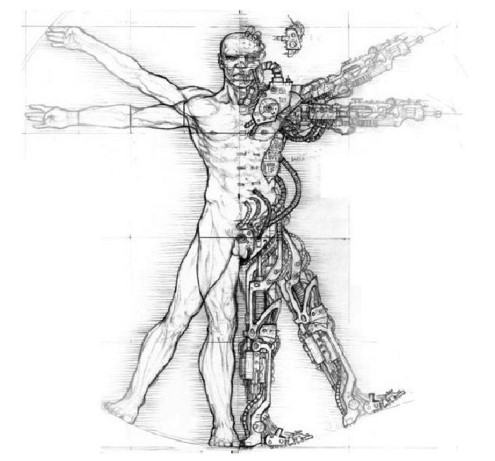
            By this improving, transhumanists believe we'll be able to evolve into new species - it'd be a human being but not entirely a man - in future we'll call this creature a posthuman. According to Transhumanism ideology, this future person will have extraordinary mental abilities and quick thinking, photographic memory and rapid assimilation of information, ideal physical built which will maintain without caring about the body - it will not gain weight or get old. Transhumanists also postulate that we should gain better control of our emotions and finding means of overcoming the limitations of organic organisms (built carbon-based) by obtaining the fusion with machines.
            Sounds like science fiction? You may be surprised but some of these postulates are already partially realized. The average human lifespan is considerably extending due to the development of medicine. Microscopes, contact lenses, hearing aids already are strengthening our senses. We know substances that increase the strength or ability to concentrate and by swallowing some pills we can improve our moods! Finally we can combine organic with mechanical body - fillings, prosthesis or artificial heart valves are no shock to us. As you can see, lots of things indicate that transhumanists' visions are closer to realization than we think. Also it's hard to ignore them when rapid development of technologies keeps on to embody new ideas.


              What all this indicates is that transhumanists do not want random development that offers us natural evolution. They believe that we must pave our own path with deliberate changes, yet not acting blindingly but relaying on a clearly defined system of values. Strong affirmation of technology shows how without fear and almost uncritical optimism transhumanists surrender to the influence of science. They want to use it to embody their vision of humanity - vision which implies rejecting anything they believe unnecessary - all the weaknesses and imperfections of human race.
              
            Transhumanism is all about striving to create posthuman who is the final phase of cybernetic man. Thanks to new technologies which will allow to unite the human with a machine we will evolve into new species – a perfect and immortal human:

"Posthuman is a descendant of the man whose range of possibilities is expanded to such an extent that an entity ceases to be human..."

For transhumanists the human body is in its biological vesture imperfect and anaesthetic, hence every effort to strive for its "improvement". Ultimately, it means liberation from your body and gaining immortal ‘vestments’.

1. Do you agree that we should use technology to improve ourselves?
2. What do you think is the risk of creating posthuman?
3. Do you think we will be able to control the evolution of species in the future?

Sources:
http://www.sienko.net.pl/lustro.html
http://www.tajemnicamilosci.pl/testy-biologiczne/transhumanizm-realne-zagrozenie-dla-czlowieka.html
http://pismofronda.pl/wp-content/uploads/Fronda40.pdf
https://en.wikipedia.org/wiki/Transhumanism
http://humanityplus.org/philosophy/transhumanist-declaration/