Monday, 11 April 2016

Week 3 [11.04-.17.04.2016] Is your data safe?


Is your data safe? A new ransomware threat: Locky

Locky ransomware is a program that spreads through a milicious Word document attached to an email. The email that distributes Locky Ransomware usually goes in the form of an invoice. This malicious Word document can immediately execute a malicious encryption process.

What does Locky ransomware really do?

As you can see, this virus is called "Locky", which itself reveals its function. This ransomware blocks the user files placed on the persecuted PC without the possibility to recover them unless you have the decryption key or a backup copy of the files stored on an external drive. To be more precise, the Locky virus starts processes that scan your computer and detect audio files, documents, videos, photos, databases, archives and other files. What's more, you can find Locky external drives and even network drives connected to your device. Upon the detection of such files, the virus encrypts them using the AES encryption algorithm. What's more, the virus deletes the shadow copies (records Volume Snapshot Service), which can be used to recover encrypted files.
After  Locky finishes its dirty work, it leaves a ransom note (_Locky_recover_instructions.txt) in each folder that has some of the encrypted files on it and  changes your desktop wallpaper to an image that shows the same ransom note information. It tells you to open an anonymity network TOR and pay a ransom of about 0.5 Bitcoins, which currently is around 1600zł
You can check the current rate at http://www.money.pl/pieniadze/bitcoin/


How fast does it spread?

Even though it is a new  threat, researchers at Palo Alto Networks have recorded 446,000 sessions involving this new ransomware, over half of which (54%) were detected to have affected victims in the United States. So far, there is no way to recover your data.
Last month  for example, a Hollywood hospital paid $17,000 to the ransomware hackers. You can read more about it at http://www.digitaltrends.com/computing/hollywood-hospital-ransomware-attack
I think if the FBI is unable to deal with it,  there is no chance for it for a normal user. There were also several cases of infections in Poland and the only „saved” data was that which was backed up.
It is estimated that the creators of Locky earned millions of dollars.
This ensures that even if the antivirus companies  deal with this threat, we can be sure that soon there will be new versions of the malware.

How can you avoid it?

Firstly, something that seems obvious. Never open or save attachments from senders you do not know or you are not sure that this is a message from a trusted source.
Also, create backup copies of the files that are important to you. The exception is when you haven’t got such data so then you have got no problem.

Questions:
1      Are you careful with email messages?
2      Do you have a copy of files which are very important to you?
3     Would you pay to recover your data from “bad” people?


Sources:


Week 3 [11.04-.17.04.2016] Eternal 5D data storage

Data storage accompanies us in our daily lives. More and more data are stored in a digital form, for example photos. In the 90s and early 20th century we were used to developing photos. This form of data storage called paper was not a very durable way of saving pictures. Nowadays when data carriage is getting bigger and bigger we wonder less where we will save our data. But it could still be a problem, because the space in our smartphones is limited. Nevertheless, the technology of data storage is growing at an extraordinary rate. An example could be memory cards that are smaller and began to store more and more data. Even over the course of a few months we can see that SSD discs that cost from 500 to 1000 zł we are able to buy now for half its price.

In this presentation I want to show you briefly how the technology of data storage was changing over the centuries. Then I will explain how two-dimension data storage works. At the end of my presentation I will explain what this future technology called 5D data storage is and how it can effect our lives.

How technology of storage data changes over the years:

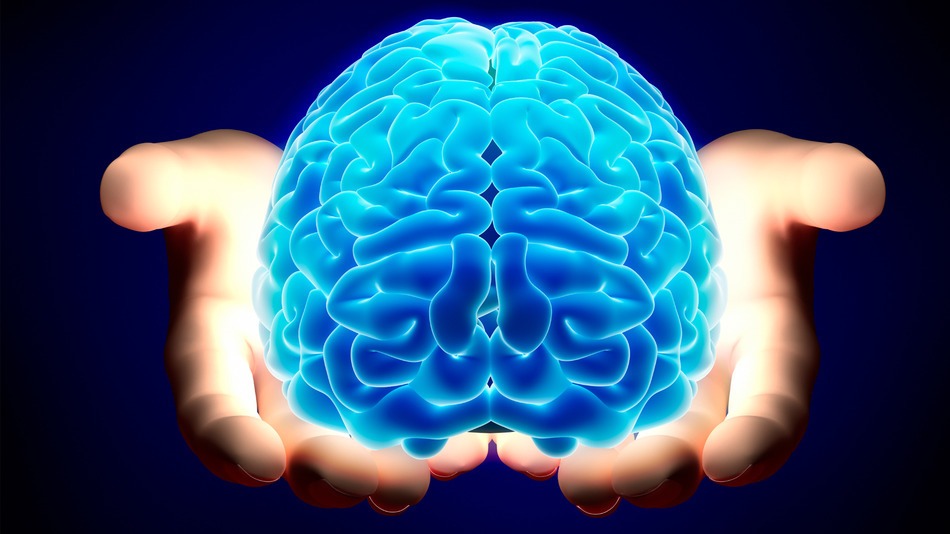
Let’s think about data storage which accompanied us from the beginning of a human species. It is our brain. The original and most powerful data storage device to date. This synaptic treasure trove of data provided the best storage for generations of oral traditions.


Now think about prehistory and ancient history. The first people stored their data on the walls of caves. Cave painting had a critical point of failure in that they were unmovable. Even today we can admire the data that has managed to maintain for many millions of years.


Carved tablets were used by Egyptians and they provided accessible and portable data storage. Papyrus paper is a much better option for saving information. While transporting data on carved tablets was problematic and dangerous, because of its size, paper became the primary means of data storage. From an ancient history until the appearance of punched card, paper was the only acceptable form of data storage.


Now let’s move to year 1725. The first punched card was invented by Basile Bouchon and was used to program mechanisms such as player pianos and textile looms. A single punched card could store about 0,12KB of data. Think about how many punched cards, we would need to save all Google data. Let’s assume that Google has stored the capacity of 15 exabytes, it is in bytes: 15,000,000,000,000,000,000 bytes ;). A punch card can hold about 80 characters and a box of cards holds 2000 cards. Here is a picture showing how high punch cards would reach compared to the ice sheets that covered the region during the last advance of the glaciers. That's three times deeper.


Magnetic tapes were invented in 1951 and began to replace punched cards. Magnetic cards had a capability of storage of 10 000 punch cards.

Next, in 1956 hard drive was invented by IBM. Over the next few decades, the storage capacity increased significantly, from 5MB to 1GB in 1982, to a few TB currently.
In 1985 CD-ROM was invented and I will use it to present:

How two dimension storage works:

First let me explain how data is read from a normal storage like CD. The laser light shins at tiny line with bumps on it. Whenever the laser hits a bump, it is reflected back and recorded as a 1. When there’s no bump it is recorded as a 0. That’s when the word “dimension” comes into play. CD on which we have only two states 0 and 1 is called two-dimension storage. We can only save on it information-on and information-off and from this information we can deduce any other data.


How the 5D storage works:

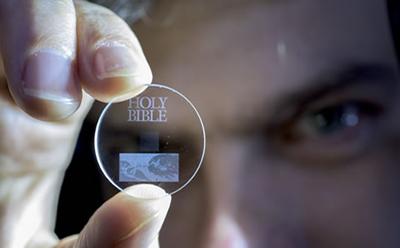
A whole new kind of digital data storage could protect the legacy of the documents humanity considers most precious. The tiny glass disk can store up to 360 terabytes of information and will be able to survive for billions of years without damage or data loss.
First let me explain how much data is 360 terabytes.
Let’s assume that the average amount of data for a Steam game is 5,525 GB. There are about 6000 games on Steam.
6000 * 5,525 is 33,15 Terabytes.
 This mean that, if we had just one standard 5D disc, we could store there 5 copies of every single game on Steam.


This small disc was invented by scientists at the University of Southampton, and is made from nano-structured glass material to store a huge amount of data in five dimensions. 5D discs store information within their interior using tiny physical structures known as "nanogratings." Much like those bumpy lines in CDs, it changes how light is reflected, but instead of doing so in just two "dimensions," the reflected light encodes five. The changes to the light can be read to obtain pieces of information about the nanograting's orientation, the strength of the light it refracts and its location in space on the x, y, and z axes. These extra dimensions allow to store more data than optical discs do.


The inventors of five-dimensional drives assure us they can survive 13.8 billion years in the room where the temperature reaches 190 degrees Celsius. They also stated that discs which they called " superman memory crystal " will survive an infinite amount of time at room temperature. The most important news is that the inventors saved the information on these drives during the experiment conducted in 2013. It was only 300 kilobytes of text information, but it shows that a breakthrough in data storage has already occurred.

Here you can see the process of writing data into nano disc by laser:


There are countless advantages of these tiny glass discs. Some day in the foreseeable future, you will stop worrying about having enough storage space for anything. The world of data storage will soon be changed forever.


Source:

Friday, 8 April 2016

Week 3 [11.04-17.04.2016] The Quantum Computer - Bring on the future of computing!

Have you ever thought about the computer 's development limit? Do you think people could improve computer parameters indefinitely? Currently our computers, tablets, phones can only do one thing at a time. They read one bit, then next one and so on.  During the process millions or maybe trillions of bits are combined to give us what we want, but the bits are always read in order. When the computer is looking for an answer, it analyses one batch of ones and zeros, tries another set of zeros and ones and repeats this process until it finds the answer. For this reason, computers can search for a solution to a problem for an incredibly long time. Imagine we could process all the sets of ones and zeros, not sequentially but at once - at the same time. I want to introduce to you a quantum computer, which performs complex calculations thousands of times faster than the currently existing supercomputers.


A quantum computer developed by D-Wave Systems.
Source: http://bits.blogs.nytimes.com/2013/05/16/google-buys-a-quantum-computer/?_r=0

Some information about quantum computing and qubits:


The quantum computer was constructed by researchers from Finland in Aalto University. It doesn’t use qubits, contrary to its predecessor created last year by a Canadian quantum computers potentate named D-Wave Systems. Qubits are quantum bits which can simultaneously have two states, the state 0 or 1. The newest Finnish quantum computer doesn’t use qubits but qutrits which use three states 0, 1 and 2.  This allowed to speed up calculations executed on a quantum computer.


A quantum computer chip
Source: http://www.livescience.com/32080-google-nasa-quantum-computer-d-wave.html

You must be interested in how the Finnish scientists made qutrits? Well, they made them by shooting two pulses of light at a group of entangled atoms. One pulse took them from the lowest energy(0) state, to a middle energy(1) one and the second pulse put them in higher energy(2) state. The pulses allowed the atoms to access all three of the energies, making them qutrits. Unfortunately scientists discovered that state 1 is rather unstable, because if the atoms are too long at this state, they have a chance of turning into the initial state(0). Researchers didn’t give up and created a walk around to this problem. They have sent the pulses in the wrong order. Firstly they took the atoms from the middle energy(1) to the highest state(2). Then they took one of them from 0 to 1. This can be compared to a backing out of a parking space scenario. We start by going forward first. Our common sense should tell us this is impossible, but atoms don’t care! This is just quantum mechanics. 


The chip of a D-Wave Quantum computer. 
Source: www.wired.com

The chip above is attached to a radiator like this:
Source: www.wired.com

Quantum computers are able to solve most complicated scientific problems and could be used to unlock every digital treasury in the world. They could become very useful in cryptography, since cryptography is based on encoding data in large combinations of numbers - the quantum computer can resolve such tasks almost instantaneously. Every bank system, every password, or an email on any computer connected to the network could be in jeopardy. On the other, scientific side, quantum computers can be used for financial analysis, logistical planning, searching for Earth-like planets or improving weather forecasts.

This seemingly physics defying method made it possible for the scientists to construct a much more advanced quantum computer than the one based on qubits. Now we could only wait to the response from the other pioneer – D-Wave.

Questions:
1.      Have you ever heard about the quantum computer? What do you think about it?
2.      Have you read recently something interesting regarding new technological discovery?
3.      Have you heard about any Polish technological discovery ?


Sources:

Friday, 1 April 2016