Hey,
I have found an interesting video. Take a look:
https://www.youtube.com/watch?v=Zph5usgWkN0
-do you drive a car?
-is it petrol or diesel?
-what do you think about these differences?
-what kind of engine do you prefer?

English Conversation Course for Part-Time Students
Friday, 29 May 2015

Wednesday, 20 May 2015
(Week 5) Polyphasic Sleep
Polyphasic Sleep
I would
like to introduce to you new ways to sleep well. Most of us think
that there is only one style of sleeping – in the evening we are going to bed
and sleep for about 6-8 h. Then we are awake for
about 16 h, and next evening we repeat the process. This form of sleep is called monophasic. There are more ways to sleep
well and shorter J. Take a look at them:

It makes no sense. Probably you are wondering if this kind of sleep is healthy and possible. Scientists say that the most
important phase of sleep is the REM one (rapid eye movement). This is the one in
which dreams occur. Generally in this phase our
brain rests and regenerates. As we use monophasic sleep we need about 45 – 75
minutes to achieve the REM phase each
night. During the polyphasic phase – the brain will
achieve it immediately. So the sleep is much
more effective. Take a closer look at the most
controversial kind of polyphasic sleep.
Uberman
cycle
Looks
crazy. The point is to doze for about 20-30 minutes every 4 hours. It is 6 slumbers per day what
equals 2-3 h of sleep. PER DAY. But who can go to bed every 4 h L? People who can say that this is
the best way to rest. When using this style we are full of energy. This also
helps to achieve lucid dream. The weak point of it is the need to respect slumbers’ time otherwise we will feel tired. I have
never tried this style, but I’ve heard some stories. For example I’ve read the
blog entry. The guy was writing that thanks to the Uberman
cycle he got so much time that he simply
doesn’t know what to do :D. He was very consistent. Sometimes he asked friends to make bed for him during parties. Then he
came back after 30 minutes full of energy. Imagine their faces :D.
Example sleep schedule: your sleep times might be at 2am, 6am, 10am,
2pm, 6pm, and 10pm. This is nice because the times are the same whether AM or
PM, and they’re consistent from day to day as well, so you can still maintain a
regular daily schedule, albeit a very different one. But be aware it takes
about a week to adjust to it. A normal sleep cycle is 90 minutes, and REM sleep
occurs late in this cycle.
Maybe sometime I will try….
To compare with „nomal sleep”:

Summary
However, the long term health
effects of this sleep pattern aren’t well known. I think that it is much healthier
than monophasic. It seems to be much more
natural – just take a look at animals. The truth is that monophasic sleep very often is
forced by culture reasons and for example work.
Benefits:
-higher alertness and energy
-more vivid dreams
-more lucid dreams
-lots of extra free time.
Defects:
-it can be inflexible
-It requires some discipline
-it takes some time to adjust.
Sources:
https://sites.google.com/a/acrsd.net/barry-s-ap-psychology/home/chapter-five-states-of-consciousness
Tuesday, 19 May 2015
(Week 5) My hobby - part II
My hobby – part II
Last time I told you about my latest passion -
motorbikes. This time I want to continue this topic… Don’t worry it won’t be
related to motorbikes but with my another hobby ;)

My snowboard –
Burton Shaun White’s 2009 edition
I went snowboarding for the first time a few years ago
when I was in high school and to be honest it was love at first sight. Unfortunately,
at the very beginning without
reciprocity ;) I was learning by myself and definitely it wasn't the best idea
in my life… I still remember how tough the first day was and the second and
third also :) My wrists were killing me but after those 3 days I was through my
first ride on a red snow road. I was truly happy! My level of adrenaline was
rising meter by meter and then I knew that: snowboarding would be with me for a
while.
Cortina D’ampezzo
Ok, after
this short introduction let’s get
back to our topic. I would like to describe to you my best snowboard trip. It
was in Italy, to be more specific, in Cortina D’ampezzo.

Cortina D’ampezzo. Source: http://www.dreamland.travel/skijanje-zimovanje/italija-zima/cortina-d-ampezzo
Cortina
D’ampezzo is located in the Veneto region, in the heart of the Dolomites. Often
called the "pearl of the Dolomites", is certainly one of the world's
most famous ski resorts. Tradition of winter sports Cortina dates back to the
late nineteenth and early twentieth century. This place was over the years the
favourite vacation destination of elite: European aristocracy, intellectuals,
artists, etc. Thanks to that, the town has gained unique, also noticeable today, atmosphere and charm. Yeah, I know
it is a little snobbish description but Cortina is a really charming place. Also you
can find there a lot of places to party or eat something good.
Ski roads

Ski roads in Cortina. Source: www.thealps.com
The most
important thing for me in that
trip were ski pistes. First of all, the preparation of ski roads was much
better than in Poland. Also the quality and length of those pistes are
brilliant in my opinion. Black roads are really hard and the blue ones are
rather easy. Snow drifts weren’t a problem. I was there for 6 days and I was
riding circa about 250 km on ski roads. Also I had some ‘free rides’ outside
the official ski roads, what not always was smart ;) I remember when once a carabinieri
wanted to give me a ticket or another time I had to stop and when I took off my
board I fell in snow to the waist. The last thing which captivated me was the
weather. During those 6 days when I was there there wasn’t even a single cloud
in the sky. The sun was shining so strongly that most of time it was possible
to ride without a jacket.
Unfortunately I can’t compare too many places because
I have been snowboarding only in Poland (in a lot of ski resorts) and Cortina. I
hope I will have an opportunity to check other places and my personal little
dream is to go to a glacier in June someday:)
Sources
http://pl.wikipedia.org/wiki/Cortina_d'Ampezzo
http://www.dreamland.travel/skijanje-zimovanje/italija-zima/cortina-d-ampezzo
http://www.snowcamp.pl/Monday, 18 May 2015
Week 5 -India
India –the country which faces many challenges
India is one of the largest and the second most populous country in the world. Since ancient times the Indian subcontinent was an important region where different religions, cultures and empires were crossing and mixing. This diversity was always a big value and advantage, as well as dangerous threat for India. During hundreds of years India have exploited those advantages; however the country has also become a victim of the threats caused by multicultural factors.
Nowadays, despite the fact that India is aspiring to become a regional leader, it is still a country facing various difficult challenges. The main problems in India are poverty, malnutrition, environmental issues, corruption, and respecting of the human rights. Many of those problems are already being solved, however there is still a lot of hard work waiting for young Indian democracy.
Poverty and malnutrition
 Poverty in India is extremely widespread. According to the United Nations Development Programme (UNDP) report in 2010, almost 30% of Indians lived below the country’s national poverty line. What is more, in accordance to World Bank 32,7% of the Indian citizens fall below the international poverty line (1.25 USD per day), while almost 69% live on less than 2 USD per day.Poverty among the Indian society is easy to notice. Streets of Indian towns are full of neglected buildings and ragged beggars. Unfortunately, many of them are young children and orphans.
Poverty directly connects to the malnutrition issue, especially among children. During past centuries the Indian subcontinent has witnessed many deadly famines. Since green revolution in the late 60s India has achieved food selfsufficiency and dismissed the specter of hunger. However, despite the green revolution’s success, contemporary India ranks 15th place among leading countries with its hunger situation in the Global Hunger Index (GHI). What is more, India is one of the highest ranking states in the world for the number of children suffering from malnutrition.
Enviromental and corruption issues
Another important challenge facing India is environment protection. During the last decades India has been facing many environmental problems. One of the most serious issues is garbage, especially the plastic one. Plastic bags, papers, food leftovers, empty containers and packages,are literally flooding Indian streets. What is more, as a result of green revolution and economic development many Indian rivers and lands are polluted by chemicals and pesticides. Only sustainable development policy can change this dramatic situation.
 Another harmful internal problem is the lack of trust in the government and corruption. In Transparency International Corruption Perception Index 2012 India ranked 94th place. The other report from 2008 says that more than 40% of citizens had experienced bribing to get the job in public offices. Basing on my personal experience, as a result of overgrown bureaucracy, lack of transparent laws and general social agreement for corruption, it is difficult to get something done in an Indian office without bribes Corruption in India influences its development, economic growth, social confidence and health care. There are many anticorruption programmes in India, however it seems that they do not work as they should.
Human rights in India
Human rights are a backbone of each democratic country. In the state of so many and different religions and cultures preserving and protecting the human rights is a great challenge. The last decade seems to be a turning point in this topic. It is easy to notice the wind of changes in androcentric and attached to traditions society.
There are many organizations fighting for woman rights and equal treatment. A few years ago, Western media were loudly speaking about the scourge of violence towards women sweeping across India. The boiling point was a brutal rape in Delhi. Indignant reaction of Indian society surprised local and central authorities, forcing them to act and stop this practice. It resulted in severe convictions for the rapists.
 The transformation in the perception of human rights is also reflected in the approach to the topic of homosexuality in India. Until recently, homosexuality was punished with imprisonments from 10 years to life sentence. All has changed in 2009 when such a provision was removed from the Indian Criminal Code. However, there is still a lot to do in this topic to improve the situation of Indian gays and lesbians.
Speaking of human rights in India, it cannot be forgotten to mention the caste system. The caste system is one of the most recognizable features of India. Throughout the centuries the discrimination and violence towards people of lower casts was common. Since 1950 the Indian Government implemented many laws and initiatives to improve the situation of the lowest cast people. A symbol of upcoming changes was the election of Dalit Kocheril Raman Narayanan for the President. Unfortunately there is still a lot to be changed. The United Nations report says that approximately 110,000 cases of violence against Dalits were committed in 2005.

Great
power equals great responsibility - this sentence perfectly suits India.
It is clear that such a big and diverse country has so many problems.
During passed decades the Indian Government tried to solve most of them. Some
ideas were good and successful but some failed.
It must be admitted that the
Republic of India is quite a young country which still makes a lot of mistakes, but the most
important thing is that it tries to take a lesson from them. There are
a lot of actual and forthcoming challenges waiting for the Indian
Government and society but the future seems to be bright.
References:
United Nations Development Programme's website: http://www.undp.org.in/whatwedo/poverty_reduction.
World Bank Report: http://povertydata.worldbank.org/poverty/country/IND.
Global Hunger Index Report: http://www.ifpri.org/sites/default/files/publications/ghi11.pdf.
World Bank Report on Malnutrition in India:
http://web.worldbank.org/WBSITE/EXTERNAL/COUNTRIES/SOUTHASIAEXT/0,,contentMDK:20916955~pagePK:146736~piPK:146830~theSitePK:223547,00.html.
Transparency International Corruption Perception Index 2012: http://cpi.transparency.org/cpi2012/results/.
Transparency International, India Corruption Study2008, http://www.transparencyindia.org/resource/survey_study/India%20Corruptino%20Study%202008.pdf.
United Nations 2005 Report: http://hdr.undp.org/en/media/hdr05_summary.pdf
Week 5 (18.05-24.05) THE POLISH VESPA


http://weteranszos.pl/motopedia/pojazd/56
First I wanted to write about design in the Polish People’s Republic (PRL). I think it was an amazing time for the Polish design and a broad topic to write about. Then I realized the topic might be too wide so I decided to present one of the masterpieces of the socialist period - a scooter called Osa.


Osa is a wasp. It is no accident that the vehicle bears the same name as the Italian Vespa.

Osa’s story officially starts in 1959, but prior to that various prototypes or predecessors were developed, amongst them ‘Żuk’ (beetle), ‘Bąk’ (gadfly) or Odra 1 and Odra 2. The main creators of Osa were three engineers, Krzysztof Brun, Jerzy Jankowski and Tadeusz Mathia. I am not going to get into technicalities because they are not what I find crucial for this article. It is worth mentioning though that the development phase of this scooter lasted for around seven years, from the moment the Head Constructor of the Warsaw Motorcycle Factory initiated the project.

It is not known who is personally responsible for Osa’s brilliant design. Most of the sources mention a few people responsible for the scooter’s construction. Apart from the well-known engineers, there was a bunch of anonymous people behind them. Destroying documentation, scrapping prototypes and the time that has passed since then caused that a lot of people do not get credit for Osa’s development. Above – one of the few preserved photos of Osa M08 prototype during test.
What’s interesting, the newly developed version of Osa – M 52 – in production since 1962, was mainly exported to India. Osa was very popular abroad, mostly due to successes achieved in motor sports. Before introducing the scooter into the production phase, the whole plan had seemed very controversial considering the political conditions back then. A communist government could not simply waste metal for such a disgusting manifestation of capitalist individualism. The mentioned sport success had made the media strongly interested in the little vehicle though, so the government was not able to simply turn a blind eye on it.
It’s also worth mentioning that scooters in their ‘modern’ form go back to military motorcycles, used e.g. in parachute squadrons during the Second World War. The first popular civil scooter, the already mentioned Vespa, has been produced since 1946. Also Czechoslovakian engineers developed a very interesting scooter in their communist times, a weird-looking CZ 501:


Sources:
Tuesday, 5 May 2015
Week 4 (04-10.05.2015) How are your thetans?
 |
http://i.telegraph.co.uk/multimedia/archive/02460/Scientology_2460585b.jpg |
As I mentioned before, in my last article (http://konwersatorium3.blogspot.com/2015/01/week-6-all-about-mormons.html), I obligated myself to write about Scientology. It’s common knowledge that celebrities like Tom Cruise, John Travolta, Nicolle Kidman or K. Preston are part of this church, but do you actually know what Scientology is all about?
I must admit that preparing this presentation wasn’t as easy as I used to think, because Scientology is a very enigmatic religion - the higher rank you have as a member, the more knowledge you gain, so the only info I was able to get was from public statements of former members.
How did it start?
The Church of Scientology was founded in 1954, based on the teachings of an American author named L. Ron Hubbard. "Lafayette" Ronald Hubbard was born in 1911, in Tilden, Nebraska. After years of being a soldier and voyager (it’s believed that his biography was slightly improved), he decided to become a writer and became one of the most famous authors of the 1930s. He wrote well over 200 novels and short stories in the genres of science fiction, western, mystery and adventure. His biggest work was a book published in 1950 called ‘Dianetics: The Modern Science of Mental Health’ which was sold in over 17 million copies and became an essential text of Scientology.
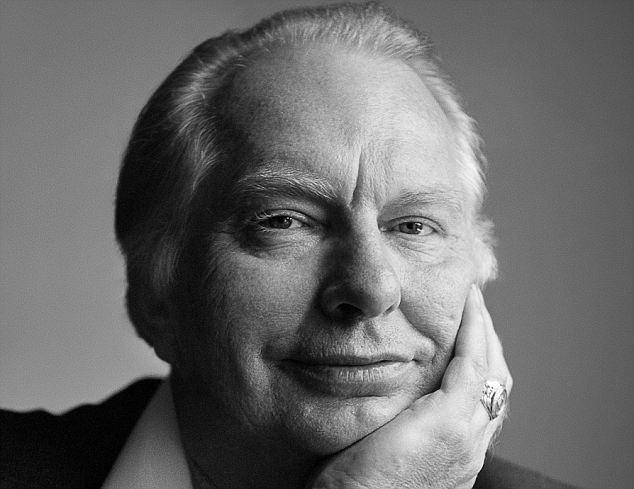 |
| http://i.dailymail.co.uk/i/pix/2013/01/26/article-2268887-172FA19D000005DC-151_634x489.jpg |

Who made us sad? Lord Xenu!
What you are going to read in a moment might feel like a joke, but this is more or less how Scentiology defines the reason why we need their help.
Around 75 million years ago, a space baron Xenu, faced a problem of overpopulation. He decided to trick many beings, drug them and send to Earth, known by aliens as Teegeeack. He placed their bodies near volcanoes and mined those areas. Then an evil lord detonated explosives, which not only killed aliens, but freed “thetans” as well. (“Thetans” can be defined as souls). By advanced technology Xenu trapped those souls, brainwashed and prisoned them on Earth. They got weaker, which forced them to group and infest human bodies – this event is called “Incident II”
So, according to Scientology, our bodies are habitats of thetans, BUT those souls do not live in us, they are us – in other words: You are a group of brainwashed, confused beings, which control/possess your body, thoughts, everything. It is said that it takes around 20 years for thetans to find another host body, after one’s death. If you made bad decisions – you (as a group of those souls) might not find a new flesh, but if you study scientology and follow the guidance of church, you may be free of all confusion, brainwash etc.
Or I can provide you with a shorten version of that story:
It sounds like pure science-fiction and for sure you can ask yourself – “How the heck people believe this?”, but every religion has unusual mythology. Is Satan changing into a snake to tempt Eve, Jesus walking on water, Buddha sitting under the tree for years or Joseph Smith translating God’s message from pure gold plates that more “believable” than this?
Here is a blog, where the author tries to explain why Scientologist believe in Xenu story: http://blogs.villagevoice.com/runninscared/2012/07/scientology_xenu_whole_track.php
How does the Church work?
The path to a state of “Clear”(final stage in Scientology), when one has freed oneself from the "reactive mind" is called “The Bridge” and is represented by this table:
http://www.najbjerg.info/scientologi/form37-enggradechart.pdf
But how does it start? How can one become a member?
You can get a brochure or be invited to fill an Oxford Captivity Test (nothing to do with the city or University). This test contains 200 simple questions, which you answer ‘yes’, ‘no’ or ‘maybe’ more or less like those presented here:
http://southpark.cc.com/clips/104271/free-personality-test#source=ff4daa77-43e0-4601-8fd6-21ea1daf9c19&position=1731&sort=airdate
Then results are presented to you and you are being offered a way to free your soul and improve yourself by private consolations called “auditions” – they listen to your confessions and talk with you about them (and very often record those sessions). While doing that, they often to use E-meter:

 |
| http://upload.wikimedia.org/wikipedia/commons/c/c3/Scientology_e_meter_blue.jpg |
Which is described as "a religious artifact used to measure the state of electrical characteristics of the 'static field' surrounding the body".
When you get higher and higher in Scientology structures, there are different stages: “Auditing”, “Purification Rundown” etc. Later on you can become an auditor, join Sea Org (paramilitary organisation), NARCONON (organisation which promotes substance abuse treatment and addiction) or many other organisations. The downside is that you are progressively forced to abandon your old life, family (if they’re not part of the church), friends so on, so on. Many people claim that they’re happy, but you can find a dozen of testimonials that tell “the truth” about Scientology. I watched 4, while preparing this article and if you had to see only one – I would recommend this one: https://www.youtube.com/watch?v=xL_K9yBOWwA.
Monday, 4 May 2015
Week 4 (04-10.05.2015) Solidarity and the Cruel Exploitation of Social Groups / Nationality Groups – Out of Their Natural Environment
I would like
to ask you for an opinion about the sources of cruelty
and solidarity in national and social groups out of their natural environment. I mean emigration and any
other kind of being out of your regular environment. I realize that the topic that I am
raising is very complicated, but I’ll try to make it more
simple :). For the past few months I have been in New York and in smaller than London cities in UK and
please forgive me, but most of my sources are my own experience.
I love to
visit national districts in large cities and
talk with people, how, when and why they moved
there and about their experiences ( of course I
do the same thing with immigrants in Poland).
Story nr. One:
Poles in USA
Location is
Greenpoint, NYC
The entire neighborhood is full of Polish bakeries, kiosks, bookstores,
grocery stores, bars. It looks like taken out of the 80s in Poland. Everywhere hanging posters of
Polish lawyers offering assistance in the
field of labor law, employment fraud and problems arising from the lack
of insurance.
My first
interlocutor is Włodek from Piła, he is tall, fiftyish, he has lived there for 20
years now. This morning someone has broken his nose. After a few minutes we know that it wasn't someone but
his young cousin who has come recently and
lived on the street so he took take of her.
The nose was broken with a chair because she got mad after he had
said something (unspecified). He needed a drink cause he
still doesn’t have medical insurance. He doesn’t don't speak English as well.
Krysia, the owner of the bar who
came here in the early '70s, told us that half of Polish immigrants, even those who have been there for 20 years, still don't speak English and don't have a green card or even visa with a work permit.
It seemed to me that nothing has changed since the
80s – “Szczęśliwego Nowego Jorku” https://www.youtube.com/watch?v=GSPqHVKwzvM


Story nr. two: Poles in UK
Location is
Leicester.
My friend has been living there for two years now, running his
mysterious (to me) business building some machines. One month
ago when he was picking
me from the airport, we saw police officers checking his vehicle’s data. It turned out
that the insurance is invalid. The car was insured by the taxi driver who is his friend also Polish. He said that he has a lot of cars so
he can pay lower rates. Of course, the lower rate paid my friend.
After the first phone call the taxi driver never picked up the phone again.
The car was taken to a police parking lot. Getting insurance after such an
offense is actually impossible because it costs £ 5,000 and without
insurance getting your car back is
impossible. Fun, right?

Story nr. Three: Ukrainians in
PL
Location is
Warsaw.
My
interlocutor is Ludmiła. Back in Ukraine she studied ethnography and then
ran her own business. After whole war mess in the east she escaped to Poland with her two daughters. Here she is
a cleaning lady and she is struggling with cancer.
" The
first year was terrible until I met the Poles who helped me. I lived in
Łomianki in a big house belonging to rich Ukrainian women, renting a room in the basement
with mold on the walls. It cost 1200zł. The rich
Ukrainian woman also offered
me a job which pays
for the rent.“
After one
year the Ukrainian woman
said that actually she never got any money and asked Ludmiła to move out at night with small children. She handed her papers indicating
that if she didn’t pay the
rent she would be sued.
Story nr. Four: Jews in UK
Location is
London
My interlocutor, named Uri ,came here from Jerusalem, he is a Hasidic orthodox who decided to leave Israel because he didn’t agree with the policy of the government.
He is a
designer and shoemaker. He decided to stay at first in the
Jewish
district of Stamford Hill. He came alone and
also he doesn’t have any family
there.
He was
welcomed very well, for the first few days he could
stay at the community center, met many people and after one week he got his first job at a shoemaker’s, a simple job, not a dream job, but good enough to pay
for a room. He said that he had such a warm
welcome, so many people wanted to help him immediately at finding a job,
finding home, applying for the legalization of his residence, etc. He is wondering if it's the
influence of the kibbutz’s
policy ( shared parenting or joint budget and work) or hundreds of
years of diaspora and its problems in finding their place in a foreign country. Who
knows...

http://dalstonist.co.uk/wp-content/uploads/2014/11/5544206457_c4415b5775_z-528x396.jpg
Epilogue
I am far from generalization, I realize that these are individual stories.
Unfortunately, such stories I usually listen
to. Also there are many others, about support among the LGBT
community in each bigger city in Poland, Europe
and USA or in broadly defined environment of
Punk leftists.
I would like to listen to your thoughts,
opinions and experiences in this field.
Also I would like to recommend watching
a miniseries "Run" about
immigrants in GB.
"Four gritty no-holds-barred human stories of the
streets, all linked together in some respect."
http://iitv.info/run/
Subscribe to:
Posts (Atom)